
The Master Teacher Blog

The Master Teacher Blog
Providing you, the K-12 leader, with the help you need to lead with clarity, credibility, and confidence in the ever-evolving world of education.
Five Ways to Overcome the Seasonal Slump

Five Ways to Overcome the Seasonal Slump

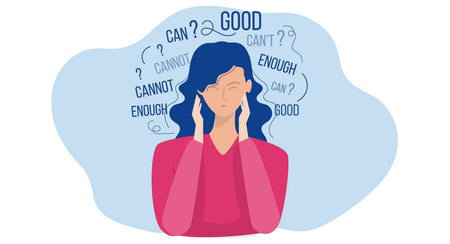
It’s that time of year again. The beginning of the school year and its novelty have faded into the past. We have established routines and found a rhythm in our work with students and colleagues. Meanwhile, the hours of daylight are dropping off, the trees are turning colors or shedding leaves, and the temperature is moderating for many of us. It is a beautiful time of year, but it can also be a time when we are most vulnerable to finding ourselves in a seasonal slump or fall funk.

We are in the limbo-like period between the excitement of getting the school year started and the anticipation of the holidays and other annual events, breaks, and benchmarks. We might find ourselves viewing this time as one to simply get through. Yet, this month does not have to coincide with a funk. There are steps and strategies we can employ to shift our perspective, renew our energy, and make this a season to appreciate. Consider these five actions.

Get (re)organized. Prior to starting the new year, most of us spent considerable time organizing space and materials. We made plans and created outlines for the coming weeks. However, as those weeks have passed, some of the organizational work may have served its purpose and now needs attention. Things that have places may no longer be in them. The planning may have served us well at the time, but now new plans and priorities need consideration. As a result, we can feel distracted, uncertain, and even lost. Taking some time to reorganize our space, reprioritize our work, and refresh our plans can reestablish a sense of control and renew our confidence that “I’ve got this.”

Manage time and energy. Each of us has the same amount of time in a day. Consequently, our decisions about how to use our time matters. Yet, how productive we are is not just a matter of time spent. In fact, productivity is more dependent on what we accomplish than on the time we spend accomplishing it. Now is a good time to think about when our energy is at its peak. For some, early morning is best. For others, midday, afternoon, or even later in the evening is when they are most productive. Obviously, daily schedules and commitments limit the flexibility we may have to match our energy with the tasks we need to accomplish. Still, this is a good time to reflect on how to best match our energy peaks and our work to maximize results in the time we have available to invest.

Find time to disconnect. Leading and teaching can leave us feeling as though we are always “on.” It can be a challenge to find downtime, create mental separation, and step back. Yet, like the instructions flight attendants give to adults to put on their oxygen masks first, we need to take care of ourselves if we hope to take care of others. This is a good time to establish routines each week—or each day if you can—to step away from email, “detox” from social media, and silence the phone for a while. We might take a walk, work out, enjoy a movie, or even take a nap. Allowing the world to pass by for a while and give our mind a rest can help to restore our energy, refocus our attitude, and refresh our hope.

Prioritize positive peers. The truth is that our attitude and energy are heavily influenced by those with whom we spend the most time. Attitudes and outlooks are contagious. While we may need to reach out and support a colleague who is struggling or needs encouragement, we also need to prioritize time with friends and colleagues who lift our spirits and energize us. We might choose to stay away from places where people go to complain. We can reach out to colleagues with can-do attitudes to help us sort out challenges and find solutions to problems we face. A new idea, creative perspective, or new insight can give us a powerful boost.

Be present. At the front end of a funk, we can become distracted by what is not going right, what we are missing, and what feels too far off into the future. Yet, there are always positive, uplifting, and meaningful elements in the present on which we can focus. Being present, appreciating the moment, being grateful for what we have, and embracing the opportunities before us can be powerful antidotes for a slump.

Now is a good time to reflect on what we get to do rather than what we must do, appreciate what we have rather than what we want, and embrace the power to shape our attitude rather than default to what distracts us.

Eight Reasons to Challenge “Those Who Can, Do; Those Who Can’t, Teach”

Eight Reasons to Challenge “Those Who Can, Do; Those Who Can’t, Teach”

The idea that “those who can, do; those who can’t, teach” has been around a long time, but it is no truer today than it was when first stated. The line is widely attributed to George Bernard Shaw in his 1905 play “Man and Superman,” although some sources say that the idea actually flips an observation by Aristotle—“those that can, do; those that understand, teach”—on its head. While the context and intent of the original statement seemingly cannot be definitively established, in common usage it has been considered an insult to teachers and the profession of education.

As educators, we know that the statement is an inaccurate, stereotyped description of one of the most impactful, respect-deserving professions. Still, many—without evidence or understanding—accept the statement as true and use it to disparage educators when it could not be further from the truth. A more accurate, modified form of the statement might be: “Those who can, do; those who want to change the world, teach.” “Doing” can change today. Teaching changes tomorrow.

Anyone with significant teaching experience, anyone having lived with someone who teaches, or even someone who has a close relationship with a teacher knows that there is far more to teaching than meets the eye. Here are eight reasons why the statement, “Those who can, do; those who can’t, teach” misses the mark:

First, teaching is not just possessing a technical skill. Obviously, teaching a concept or skill requires knowing it, but teaching is far more than simply speaking information. It involves a complex set of skills and processes. To be successful, teachers must demonstrate proficiency in explaining concepts and skills to learners with a variety of abilities and needs, diagnosing areas of confusion and supplying missing background knowledge, and assessing where learning has occurred and where additional attention and support is needed—all while being constantly “on” with a live audience.

Second, teaching requires well-developed interpersonal skills. While one might practice a technical or professional skill without constant and intense engagement with others, teachers are constantly interacting with learners, answering questions, providing feedback, clarifying concepts, and sharing strategies, all while responding to a variety of personalities. When working with young learners, the ability to form and maintain strong relationships is key to the learning process. This all, of course, occurs in addition to collaborating with team members and other school staff as well as students’ guardians and families.

Third, teaching requires more than motivating oneself to do something. Performing a technical task or process may require one to motivate him or herself, but teaching demands the ability to motivate others, including those who may not be inherently interested in what they are being asked to learn. Most professions are not expected to serve customers and clients who are not interested in their service or purchasing their product.

Fourth, teachers are accountable for students’ learning even when those students lack adequate background knowledge and readiness. Some students come to the classroom lacking key skills and background knowledge necessary for success at the current grade level and with the content and skills contained in the formal curriculum. Yet, teachers are expected to ensure that they meet preset, universal standards that assume student readiness and adequate background—and are accountable for whether students meet those standards. Few other professionals are held responsible for the success of clients who are not adequately prepared to engage in the services they provide.

Fifth, teaching increasingly involves bridging theory and application. Students today want to know how what they are asked to learn will be useful in their future and make their lives better. They want to understand the why of learning. Teachers need to know how to explain why in much more individualistic and diverse ways if they hope to succeed with students.

Sixth, teaching involves helping others learn how to learn. It is one thing to learn something ourselves; it is another to teach others how to learn for themselves. Helping students to learn how to learn is at least as important as the immediate information and content-related skills dictated by the curriculum. The learning skills that teachers nurture in students prepare them to continue to learn long after they leave their current teacher and complete their education.

Seventh, teaching requires the engagement and satisfaction of multiple categories of customers. Most services have an identified customer category to be satisfied. However, teachers must address the immediate customer—the student—while also meeting the expectations of parents and families. Unfortunately, what students may want is not always aligned with their families’ expectations. It also might be argued that supervisors, mandated curriculum, and state standards must also be satisfied as secondary customers for teachers’ work.

Eighth, teaching requires engagement with a diverse client base. Students in today’s schools aremore diverse than at any time in history. Service providers and manufacturers typically have some flexibility and choice in the clients or customers they serve. Teachers engage every learner who enters their classroom with the expectation that regardless of background, preparedness, interest, ability, or culture, they will learn. Successful teaching requires extreme flexibility, patience, and commitment, often beyond what is required in other professions.

Teachers and teaching deserve better. The next time you hear someone say, “Those who can, do; those who can’t, teach,” feel free to correct them with, “Those who can, do; those who want to change the world, teach.”

A Thank-You Letter to Educators

A Thank-You Letter to Educators

Educators, 

In this season of gratitude and reflection, we wanted to extend a heartfelt thank-you to each of you who hold such an integral place in our society. Examination will reveal that whenever our country has faced a huge task, America has turned to the schools and all the people who work in them to get the job done. 

In the last 120 years, we have had three different eras that required the country to change drastically. Schools, and the entire school team, performed magnificently in each of these eras to keep this country a world leader. Indeed, in the past 120 years, one decade after another, the entire school team served with distinction. We need to be proud of the role teachers and staff are still playing. Remembering success in the face of past challenges can serve all of us well today and tomorrow. 

First was the manual labor era. In the 1800s, it took 95% of our population to feed this nation. Planting, tending, and harvesting crops were regarded as more important than schooling. As a result, a minority of children were educated. School schedules revolved around the labor needs of the family farmer. It also was assumed that anyone could teach. 

Later, requirements to teach were enacted. To teach, a person had to have attended school one or two grades beyond the grade they taught. Manual laborers made up the bulk of workers in both rural and urban environments. The workday was 12 hours… and the work week six to seven days. Less than 5% of our population entered college. The standards and requirements in schools were not very high. “Come when you can” was more of a rule for students than “come every day.” 

Then came the industrial era, and everything changed. It brought a migration from the farm to the city with a need for a large workforce that could read and write as well as operate industrial machinery. As the complexity to produce, operate, and maintain equipment increased, so did the need to have a workforce that could read and write, as well as run, fix, maintain, and build industrial equipment. 

The call to meet the needs of our country changed. Our schools were counted on to meet this need. We realized that to support a mass-production economy, we had to have a mass-consumption society. To get more kids in the classroom and have them be successful in the workforce, we implemented a system of mass education that included students from every background and social status. Our country prospered and thrived as a result. 

Then came World War II. The government promised all GIs a free high-school or college education when the war was over. To facilitate their success, funding was provided to support education opportunities for them at unprecedented levels. 

By the 1950s, over 50% of all eligible young people were in high school. We increased teacher certification requirements again. Our teachers had to have more skills to teach their students with a wide variety and level of abilities. Both worker and management needs in business and industry as well as demands for professional skills increased—and college enrollment rose to 10% of the population. 

The industrial era also brought social and labor unrest, rebellions, and demands from minorities for more rights in the 1960s. Again, the country turned to our schools to integrate, include more students, teach our minority students, and educate children with different physical and mental needs. Schools responded. By the late 1970s, over 90% of all our children eligible to be in school were in our classrooms. Teachers took a more respected place in society. Employment as a teacher without a degree was not allowed. Requirements for continuous teacher certification included additional college study and certification periodically. Master’s degrees became common, and even more advanced degrees were not rare. 

Then, the 1980s introduced the high-tech era. The computer brought the need for even greater skills and more sophistication in the workplace. Accelerating the trend of the industrial era, fewer people were needed to produce greater quantities of work. Fewer people were needed to get more work done a whole lot faster and much more accurately. Again, our country turned to our schools to prepare students for a new kind of work and job. And again, as they have through history, educators did the job. 

We have now moved to a skill-based society that values a high degree of technical knowledge. Most jobs are no longer in the manufacturing sector of the economy. Education now faces the challenge of meeting the needs of this latest era. 

The wide range of comprehensive services schools provide to students, parents, and society now exceeds those of almost any public institution—and more seems to be expected of schools as the days pass. 

Leading up to, during, and after the COVID-19 crisis, schools continue serving students in ways that are unbelievable. In addition to teaching them, schools bus children to school and take them home every day. Schools feed students both breakfast and lunch at school and even take meals to their homes. Schools provide healthcare. Counseling services are provided, and attention is given to the social and extracurricular needs of students. Schools compensate for the mental and physical strengths and weaknesses of students. And services for students with special needs are provided. Schools have had to teach students at home and at school. During the pandemic, many teachers taught their students online and then had to turn around and teach their own children at home. 

These realities should make the entire team of every school proud. The entire team means everyone: administrators, teachers, counselors, paras, coaches, administrative assistants, nurses, cooks, custodians, bus drivers, members of the board of education, and support staff. Each member of this team is vital to meeting the needs of our students. They have done the exceptional during one of the most difficult times of our history—and they will continue to do so. 

To you all we say thank you, thank you, thank you. The entire school team has done more good for more people more consistently and more effectively than we would have thought possible just a few years ago. The tradition of superior performance continues in our schools. Bless all of you. Just take a moment to take pride and joy in what you have achieved. You are all wonderful. 

Thank you.

Ten Ways ChatGPT Can Save Time and Support Instruction

Ten Ways ChatGPT Can Save Time and Support Instruction

It can be challenging to figure out how to respond to the emergence of artificial intelligence, especially in the context of education. Some school districts have responded by banning the use of ChatGPT. Others are experimenting but remain unsure of the benefits and drawbacks. Of course, what we are seeing is just the beginning of the impact artificial intelligence will have on teaching and learning.

Regardless of what may lie ahead, there are immediate opportunities for educators to leverage chatbots, such as ChatGPT, to lighten their load and reduce the time they spend with a variety of common, but time-consuming tasks. Of course, just because these tools are available does not mean that they should become a substitute for professional judgment and skills. Nevertheless, here are ten ways in which chatbots can save time and provide opportunities for educators to engage in other high leverage activities:

  1. Plan lessons. Chatbots can make activity suggestions, provide instructional strategy ideas, and identify potential resources. Benefit: Less time must be spent planning and more ideas are available to draw from.
  2. Collect information and research. Chatbots can reduce the amount of time spent searching the internet and elsewhere for information to support instruction. A well-formed prompt can generate a succinct summary of a wide variety of information. Benefit: Less time spent searching and researching.
  3. Generate ideas to help students see purpose and utility in what we are asking them to learn. We can infuse these ideas in discussions to reinforce connections and help students to place greater value on what they are learning. Benefit: Ideas and strategies to draw from, and students who are more engaged.
  4. Locate examples and suggest applications for new content and skills. We can use these examples and suggestions to help students see utility in what they are learning, and we can design activities that take advantage of potential applications to keep students engaged. Benefit: Reduced time researching and better learning connections for students.
  5. Modify content to match student learning readiness. Students learn best when presented with content that they can comprehend and that matches their skill level. Benefit: Less time spent modifying or interpreting challenging content and more learning success.
  6. Provide succinct background information. Many students need additional background knowledge to benefit from our instruction. Chatbots can collect information and present it at the specific grade or reading level of the student. Benefit: Immediate resource to tap and more learning success.
  7. Suggest ways to connect one academic discipline to another. Cross discipline learning tends to be more meaningful and can aid in retention of content and skills. Students often fail to make these connections and finding meaningful connections can be challenging and time consuming. Benefit: Reduced time spent researching and planning and improved student success.
  8. Provide feedback and suggestions in response to student work. Chatbots can offer guidance for word choice, grammar, and syntax. Our follow-up conversations can add our feedback on the content and quality of their work. Meanwhile, we remain aware of areas of struggle and positioned to provide support. Benefit: Reduced time analyzing and providing supplemental feedback on mechanics while remaining focused on the concepts and content of student writing.
  9. Grade student tests and quizzes. For some types of assessment, such as multiple choice and short answers, chatbots can grade student responses, and in some cases provide feedback to students. Of course, chatbots can also generate questions and develop writing prompts. Benefit: Reduced time spent preparing assessments and grading by hand.
  10. Compose correspondence drafts. Deciding where to start and how to frame information in correspondence, particularly sensitive correspondence, can be a challenge. Chatbots can provide a place to start and content to edit and shape to support our message while maintaining our voice. Benefit: Access to starter ideas and wording and reduced time planning and composing correspondence.

Of course, the next question is how best to use the additional time that chatbots help us to create. Here are five ideas to consider:

  • Conferencing with students about their learning
  • Providing high-level feedback to students
  • Counseling students regarding effective study strategies
  • Building strong relationships with students
  • Engaging students in authentic, performance-based assessments
  • Taking a breath . . .

We may not be able to predict the future and artificial intelligence’s impact on education. However, there are important and useful purposes to which the technology can be applied now. Of course, the more experience we develop with artificial intelligence the better able we will be to make decisions about it and leverage its potential.